
Kitchen & Appliances
Kitchen & Appliance Inspection in Shakopee, MN
Appliances — what we actually test
Every included appliance (as defined in the purchase agreement) is turned on and cycled during the inspection. We do not load-test, stress-test, or run full cycles, but we verify that each appliance powers up, operates in its basic modes, and has no obvious leaks, odd noises, or fault codes.
- Range / cooktop: every burner lit; oven set to 350°F and heated to verify temperature via infrared thermometer.
- Oven / microwave: heating test with a cup of water; fan and light function.
- Dishwasher: brief cycle start; check for leaks, proper high-loop drain connection, air gap if present.
- Refrigerator: interior temperature check (should be ≤40°F fresh / ≤0°F freezer); ice maker tested if accessible.
- Garbage disposal: run, check for leaks and grinding.
- Range hood: fan operation, light function, and ducting (vented to exterior is best; recirculating is common but noted).
Kitchen electrical — GFCI is required
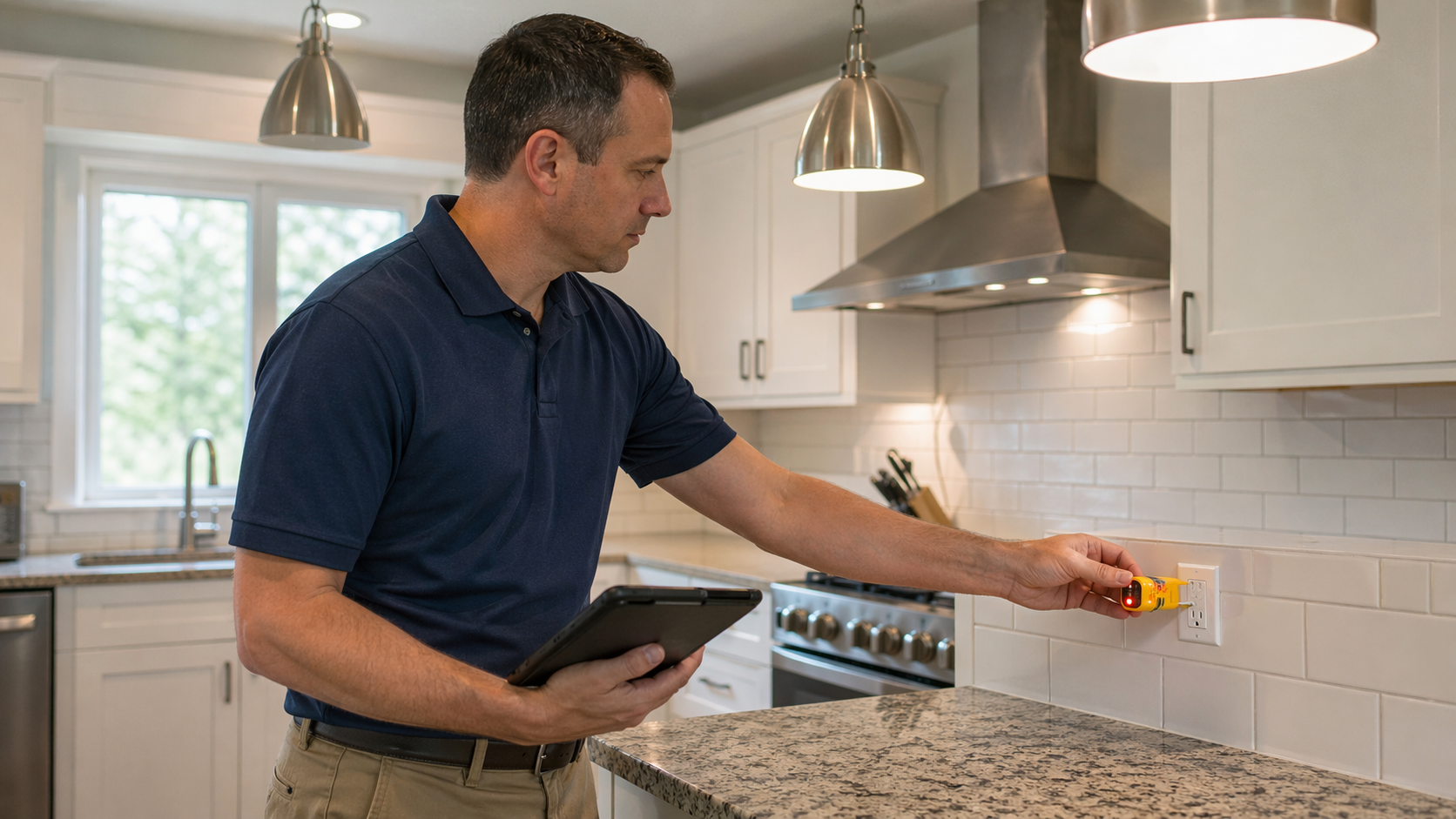
All countertop outlets within 6 feet of a sink require GFCI protection. We test each one with a GFCI tester and report any failures. Common finds:
- 1980s kitchens with no GFCI protection at all — upgrade recommended
- GFCI reset tripping and not resetting (failed receptacle)
- Under-counter dedicated circuits for disposal and dishwasher — verify proper wiring
- Microwave on a shared circuit with other appliances — tripping risk
Plumbing under the sink
The under-sink area is one of the most common leak sources. We check:
- Supply shutoffs — function and corrosion
- P-trap and drain connections — leaks, slime, improper slope
- Disposal connection and dishwasher drain loop
- Water softener or filter installations — proper installation, no dripping
- Evidence of past leaks — swollen cabinet bottom, mold, water staining
Ventilation and ducting
A proper range hood vents to the exterior, ideally through a smooth-wall metal duct. Recirculating hoods (the filter-and-blow-back-into-the-room type) are common in older kitchens but remove very little moisture and grease. In Shakopee and south-metro tract homes we often find exterior-vented hoods where the damper is stuck or the vent termination is painted shut — the fan runs but air goes nowhere.
Part of our full buyer's home inspection
The kitchen & appliances evaluation above is one of 75+ sub-components documented during a complete buyer's home inspection in Shakopee, MN. Every finding is photographed, described in plain English, and delivered in a 50–80 page report within 24 hours of the inspection.
Frequently asked questions
Do you test the dishwasher?
Yes. We start a brief cycle, check for leaks at the base and under-sink drain connection, and verify the high-loop or air-gap drain is present. We do not run a complete 2-hour cycle.
Are GFCI outlets required in the kitchen?
Yes — any receptacle within 6 feet of a sink must be GFCI-protected. We test each one and note any that are missing or failed.
What if the range hood just recirculates?
Recirculating hoods are legal and common but remove little grease and no moisture. For a gas range, an exterior-vented hood is strongly preferred.
Free Instant Quote
Schedule Your Kitchen & Appliances Inspection
Use the calculator below for an instant price and to reserve your inspection slot — or call the number on the right to talk with an inspector now.
Ready to schedule your inspection?
Reports delivered in 24 hours. Ask about our optional buy-back guarantee.