
Floors, Walls & Ceilings
Floors, Walls & Ceilings Inspection in Shakopee, MN
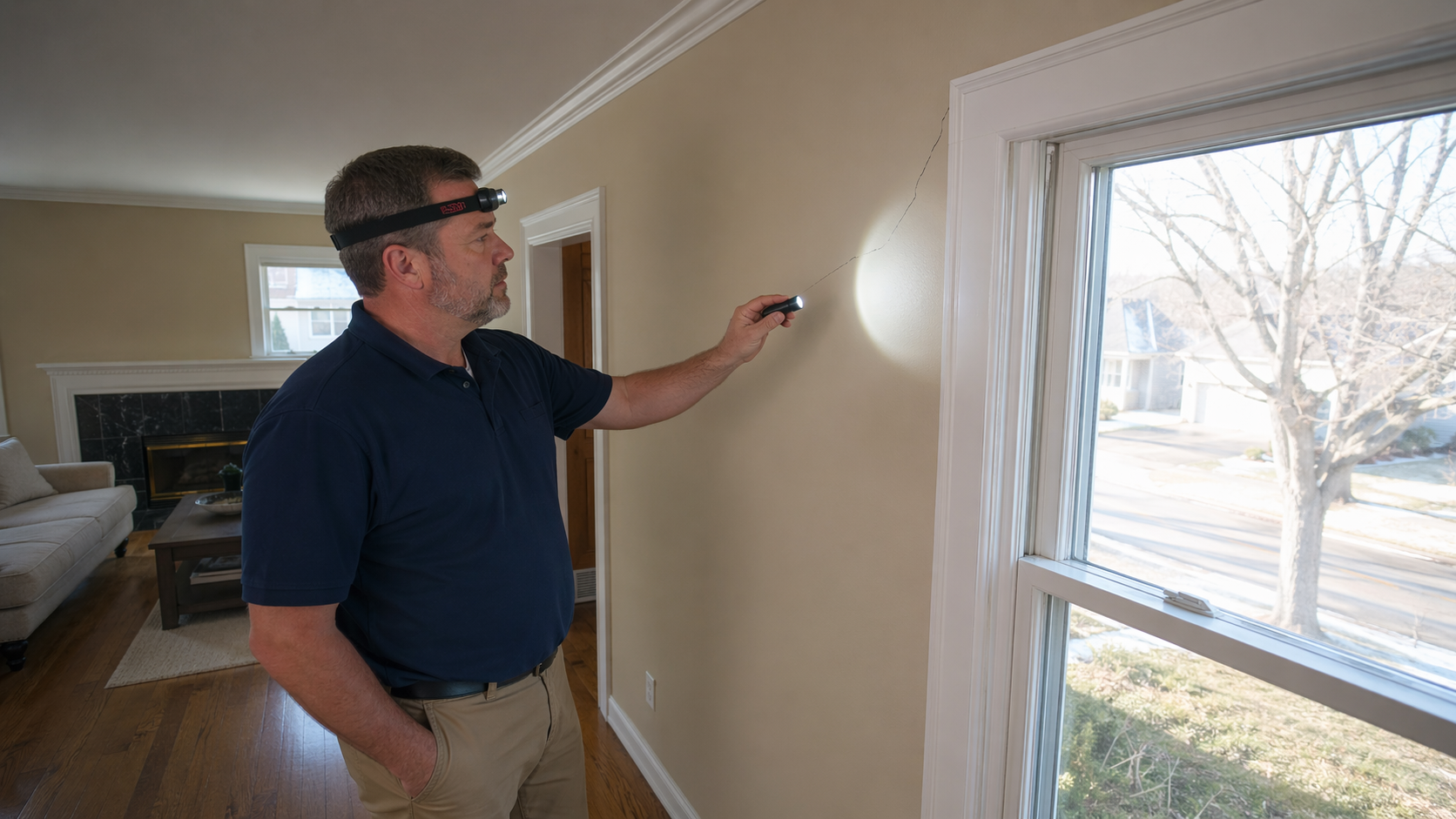
What the visible surface tells us
Floors, walls, and ceilings are the single largest visible surface area in the home — and many serious structural, moisture, and settlement issues first show up there. During inspection we walk every room and document:
- Drywall cracks: horizontal cracks above door frames and stair-step cracks in corners often indicate foundation settlement. Fine hairline cracks are usually cosmetic.
- Ceiling stains: yellowed or brown rings indicate past or active roof, plumbing, or ice-dam leaks. We photograph and cross-reference with the attic inspection.
- Water-damaged trim: buckling baseboard in basements, swollen window sills, or blistered paint near a tub are moisture indicators worth documenting.
- Uneven floors: we place a 4-foot level on suspect areas. Slope above 1/2 inch per 8 feet triggers a structural callout in older Shakopee homes.
- Floor squeaks and sagging: frequently a sign of undersized or unsupported joists, or of lost subfloor glue bond over decades.
- Popcorn ceilings: pre-1980 texture may contain asbestos — we flag it for a sample test before any remodeling.
What FLIR thermal imaging reveals
The human eye can only see what the drywall shows. FLIR thermal imaging lets us see through the surface to what's happening in the framing, insulation, and wiring behind it. On every Shakopee inspection we scan walls and ceilings and look for:
- Missing insulation: cold patches or "stripes" between studs in exterior walls — common in 1970s–1980s builds where insulation settled or was installed incorrectly.
- Active moisture: cold, damp-reading patches around windows, at ceiling-to-wall joints, or near tubs and showers. Moisture shows as a cold thermal signature.
- Heat leaks: hot signatures near a ceiling plane indicate warm air escaping into the attic — the root cause of ice dams.
- Hot wires or overloaded circuits: a bright hot point behind a wall is a potential electrical hazard.
Common Minnesota-specific findings
South-metro homes have a few recurring issues we watch for. 1950s–1970s Shakopee and Savage ramblers often have settlement cracks at the main girder. 1990s two-story builds in Prior Lake tend to show ice-dam damage at the second-story ceiling near the eaves. Walk-out basements in Lakeville and Farmington frequently have moisture infiltration at the cold-side walls where stucco or siding meets grade.
Part of our full buyer's home inspection
The floors, walls & ceilings evaluation above is one of 75+ sub-components documented during a complete buyer's home inspection in Shakopee, MN. Every finding is photographed, described in plain English, and delivered in a 50–80 page report within 24 hours of the inspection.
Frequently asked questions
Do you use thermal imaging available as an add-on. It sees through walls to reveal moisture, missing insulation, and heat leaks that a visual inspection alone cannot.
What does a horizontal crack above a door mean?
It can indicate foundation settlement or framing movement in that wall. We cross-reference with the foundation inspection and floor-level check before making a recommendation.
Is popcorn ceiling dangerous?
Texture applied before 1980 may contain asbestos. It is safe if left alone — the hazard is disturbance during remodeling. We recommend a sample test before any scraping or demo.
Free Instant Quote
Schedule Your Floors, Walls & Ceilings Inspection
Use the calculator below for an instant price and to reserve your inspection slot — or call the number on the right to talk with an inspector now.
Ready to schedule your inspection?
Reports delivered in 24 hours. Ask about our optional buy-back guarantee.