
Exterior Foundation Wall
Exterior Foundation Wall Inspection in Shakopee, MN
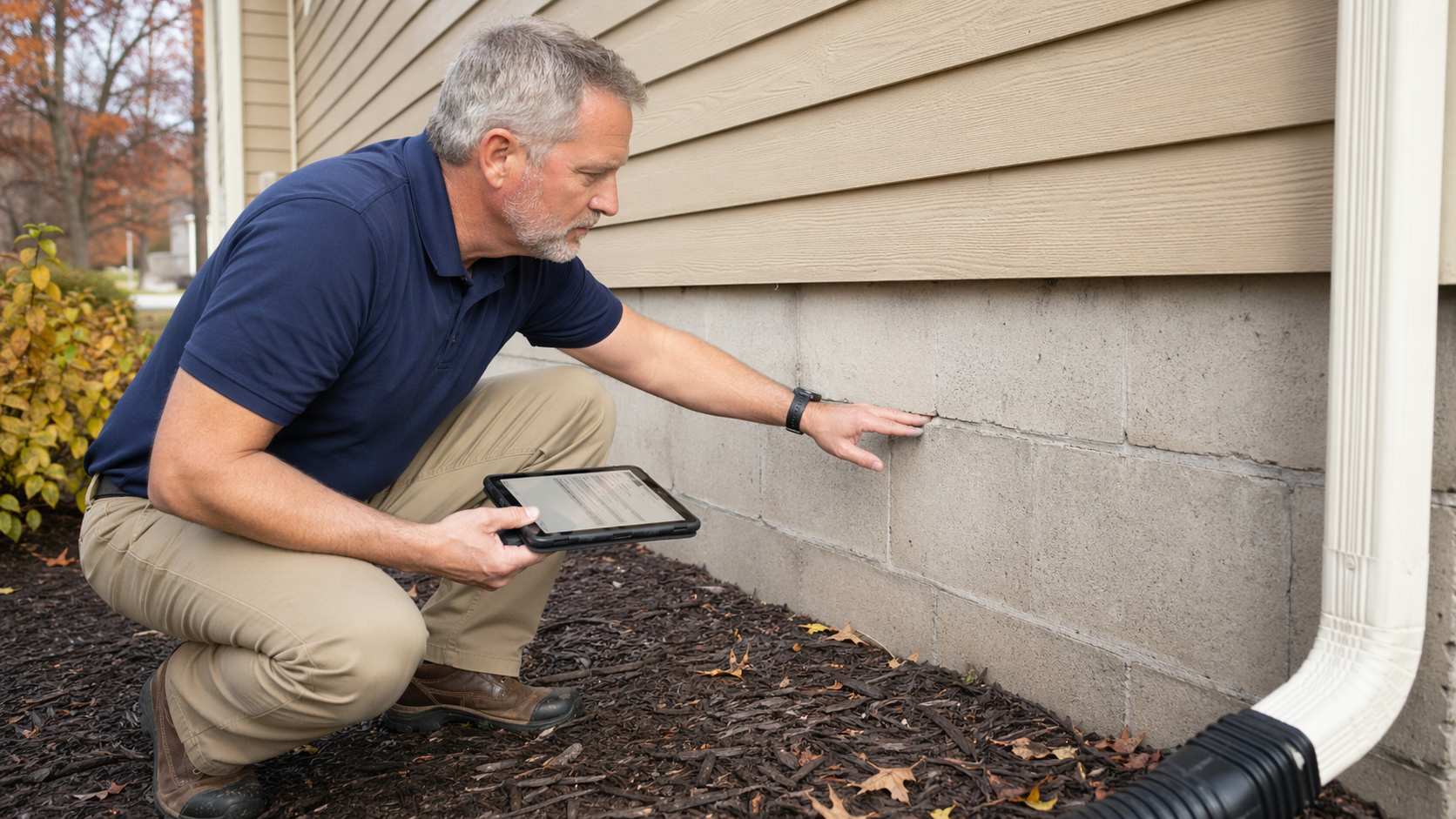
Foundation types in south-metro homes
- Poured concrete (1960s–today): most common in modern Shakopee, Savage, and Prior Lake subdivisions. Durable; fails primarily at cold joints and tie rods.
- Concrete block (CMU) (1950s–1990s): common in mid-century Minnesota homes. More susceptible to lateral-pressure cracking and mortar-joint failure than poured concrete.
- Stone and rubble (pre-1940): rare in south metro, more common in older Shakopee and Chaska homes. Assessed differently — some cracking and settlement is expected.
- ICF (insulated concrete form) (2000s–today): premium new construction. Very durable; failure modes involve the EPS insulation layer more than the concrete core.
- Preserved-wood foundation (PWF) (1970s–1990s): pressure-treated lumber foundations. Uncommon but present. We inspect for proper drainage, water infiltration, and decay at the sill.
What we look for on every foundation
- Cracks: size, direction, and pattern are what matter. Vertical hairline cracks are usually cosmetic shrinkage. Horizontal cracks, step-cracks in block walls, and any crack wider than 1/4" get escalated. Diagonal cracks from corners often indicate settlement.
- Bulging or bowing: visible inward deflection of a block wall is a serious sign of lateral pressure failure — call a structural engineer.
- Parging condition: parging is the thin cement coat applied to the exposed portion of the foundation. Failed parging lets moisture into the block or concrete behind it. Common finding in 1970s–1990s homes.
- Efflorescence: white chalky deposits on the exterior face indicate past water movement. Usually not structural but worth documenting.
- Rust staining: from embedded rebar or tie rods. Advanced corrosion can spall the concrete.
- Tie-rod holes in poured walls: should be sealed with hydraulic cement; open holes can leak.
- Settlement and uneven foundation heights: measured with a level where accessible; significant differential settlement is a structural concern.
Where the exterior foundation meets the rest of the house
- Sill plate: the horizontal wood member that sits on top of the foundation. Checked for termite damage, moisture, and anchor-bolt presence (code requires anchor bolts every 6 feet).
- Rim joist: the band of wood at the top of the foundation. Common rot location in Minnesota if flashing is missing or grade is too high.
- Brick veneer shelf angle: in brick homes, the steel shelf angle that supports the veneer. Rust here can push the brick outward — a serious repair.
- Grade-to-foundation interface: siding should stop at least 6 inches above finished grade and 2 inches above hard surfaces. Burying the foundation wall makes inspection impossible and creates a hidden entry point for water and termites.
We pair the exterior inspection with the interior basement inspection — issues visible from outside often correlate with evidence (stains, cracks, efflorescence) visible from inside. The full picture is what gives you confidence in the foundation's condition.
Part of our full buyer's home inspection
The exterior foundation wall evaluation above is one of 75+ sub-components documented during a complete buyer's home inspection in Shakopee, MN. Every finding is photographed, described in plain English, and delivered in a 50–80 page report within 24 hours of the inspection.
Frequently asked questions
Are cracks in my foundation always serious?
No — hairline vertical shrinkage cracks are normal in poured-concrete walls. Horizontal cracks, wide cracks, or bulging walls are serious and require a structural engineer.
What is parging and why does it fail?
Parging is the thin cement coat on the exposed foundation. Freeze-thaw and poor bond cause it to delaminate. Re-parging is a straightforward repair at $5–$15 per linear foot.
Can I see the full foundation from outside?
Usually only the exposed portion above grade — typically 6–24 inches. The below-grade portion can only be inspected from inside or via excavation.
Free Instant Quote
Schedule Your Exterior Foundation Wall Inspection
Use the calculator below for an instant price and to reserve your inspection slot — or call the number on the right to talk with an inspector now.
Ready to schedule your inspection?
Reports delivered in 24 hours. Ask about our optional buy-back guarantee.