Chimney & Roof Penetrations
Chimney & Roof Penetration Inspection in Shakopee, MN
Why penetrations matter more than shingles
Most homeowners worry about their shingles. Inspectors worry about everything on the roof that isn't a shingle. Every pipe, vent, chimney, and skylight is a hole cut in the roof deck; each hole is then sealed with flashing, boot, or counter-flashing. Those seals have a service life far shorter than the shingles themselves — typically 10–15 years for rubber pipe boots, 25–40 for properly installed chimney flashing.
Chimney — the highest-risk penetration
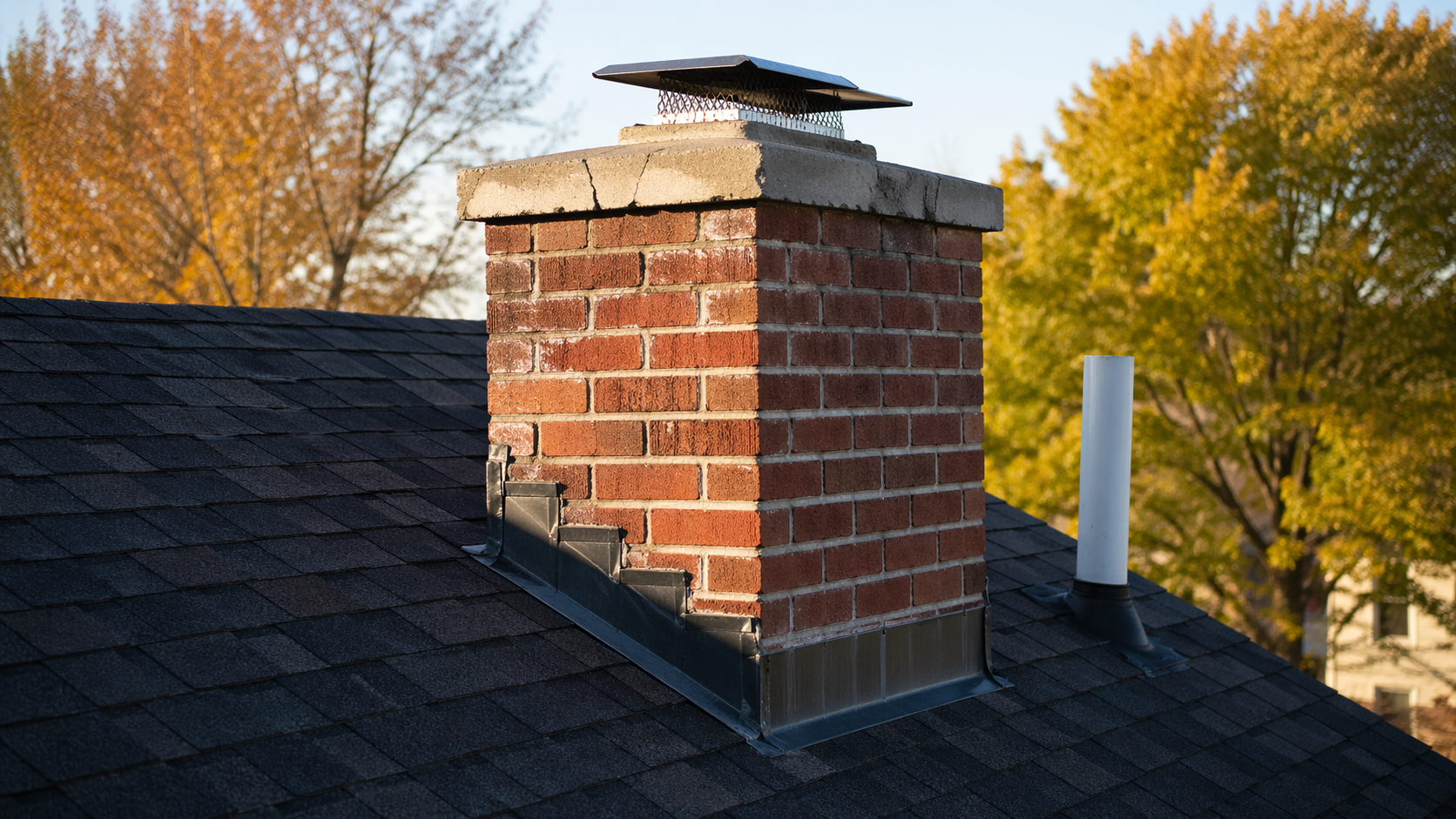
A masonry chimney in Minnesota takes a beating. Freeze-thaw cycles crack the crown. Mortar joints erode. The flashing gets kicked by ice dams. We inspect:
- Crown condition: the concrete cap at the top of the chimney. Cracks here let water into the brick and cause spalling.
- Mortar joints: soft, missing, or "bag" mortar indicates tuck-pointing is needed.
- Flashing: step flashing and counter-flashing should be intact, sealed, and not "tarred" as a temporary fix.
- Flue cap / rain cap: keeps rain, snow, and animals out of the flue.
- Visible flue interior: from the top we look for visible cracking, creosote, or obstruction.
- Chimney lean or separation: a chimney pulling away from the house indicates foundation or structural movement.
For any wood-burning fireplace we recommend a Level II chimney sweep inspection — they can camera the flue interior and check for creosote and cracked tile liners we can't see from the roof.
Plumbing and HVAC vents
- Plumbing vent stacks: 1-1/2" or 2" ABS/PVC pipe extending through the roof. The rubber boot around the base is the #1 source of roof leaks once it exceeds 10 years. Dried, cracked, or UV-degraded boots get called out.
- Furnace B-vent (atmospheric gas furnace): galvanized double-wall pipe with a storm cap. Check rust, storm cap condition, clearance to combustibles.
- High-efficiency furnace / water heater: PVC intake and exhaust at the sidewall, not through the roof. If in the attic, flashing gets checked separately.
- Bath fans: must vent to exterior, not into the attic. We'll trace this during the attic inspection.
- Radon mitigation pipe: 4" PVC; active system with a fan should be exhausting above the roofline.
Skylights and solar tubes
Skylights are a common Minnesota leak source. We check the flashing kit, the curb condition, any visible ceiling water staining from below, and the condition of the glazing seal. Solar tubes (tubular skylights) are generally more durable but we still check flashing and ceiling trim.
Part of our full buyer's home inspection
The chimney & roof penetrations evaluation above is one of 75+ sub-components documented during a complete buyer's home inspection in Shakopee, MN. Every finding is photographed, described in plain English, and delivered in a 50–80 page report within 24 hours of the inspection.
Frequently asked questions
How often should a chimney be inspected?
Every year if actively used (NFPA 211), and a Level II inspection at any real-estate transaction. Our inspection is a visual assessment of exterior condition; a chimney sweep does the interior.
Why is the rubber boot around the plumbing vent the biggest leak source?
UV and freeze-thaw degrade rubber quickly in our climate. A boot installed in 2010 is likely cracked by 2025. Replacement is $100–$200 and prevents thousands of dollars in ceiling damage.
Do you inspect the inside of the flue?
Only what is visible from the top with a light. A full interior evaluation requires a Level II chimney sweep inspection with a camera.
Free Instant Quote
Schedule Your Chimney & Roof Penetrations Inspection
Use the calculator below for an instant price and to reserve your inspection slot — or call the number on the right to talk with an inspector now.
Ready to schedule your inspection?
Reports delivered in 24 hours. Ask about our optional buy-back guarantee.